No products in the cart.
Return To Shop


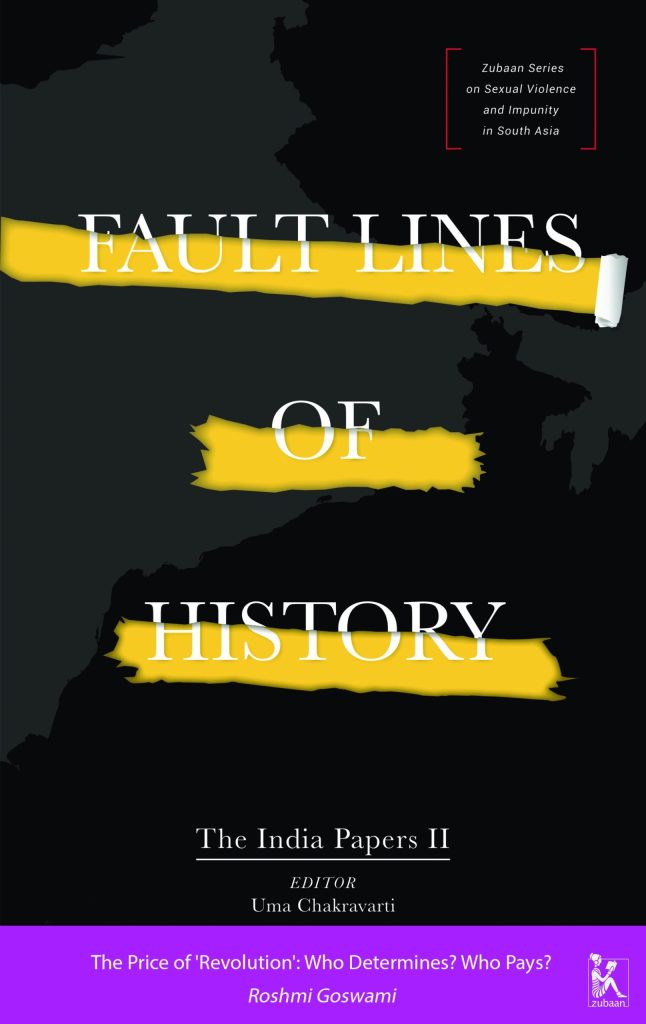
This essay looks at case studies of sexual violence against women combatants and sympathizers in Northeast India to examine the special vulnerability of this category of women to sexual violence. As Roshmi Goswami points out, at present there are over fifty armed groups in the region making a plethora of demands and situated at different stages in the continuum of conflict. The author argues that women have borne the brunt of this ongoing turmoil—whether they have been specifically targeted by security forces or rival militant groups. Sexual violence is deployed to torture, humiliate people or to punish and humiliate an enemy group or a community that is perceived to be the ‘other’.
The case studies include those of Thangjam Manorama, Snehalata Duara and Roshmi Bora. These cases bring out how issues of sexual violence often remain outside the purview of ‘peace negotiations’, and how the legal regime has provided impunity for armed forces. Goswami also dwells on how the relative or perceived agency of women combatants ends when the ‘militant’s uniform’ is given up. Ex-combatants are often deeply traumatized having experienced and seen violence at very close quarters, and are in need of long term gender-sensitive psychosocial counselling, which is hardly available in reintegration packages and schemes.
The author concludes by questioning the term ‘post-conflict reconstruction’, pointing out its problematic position: ‘reconstruction’ implies restoration to a former status quo that might not be beneficial to women. She states that for feminist peace activists, genuine conflict transformation necessarily brings the notions of justice and peace together, which would entail correcting inequalities and discrimination while ‘reconstructing’. Continue Reading The Price of ‘Revolution’: Who Determines? Who Pays?
Continue reading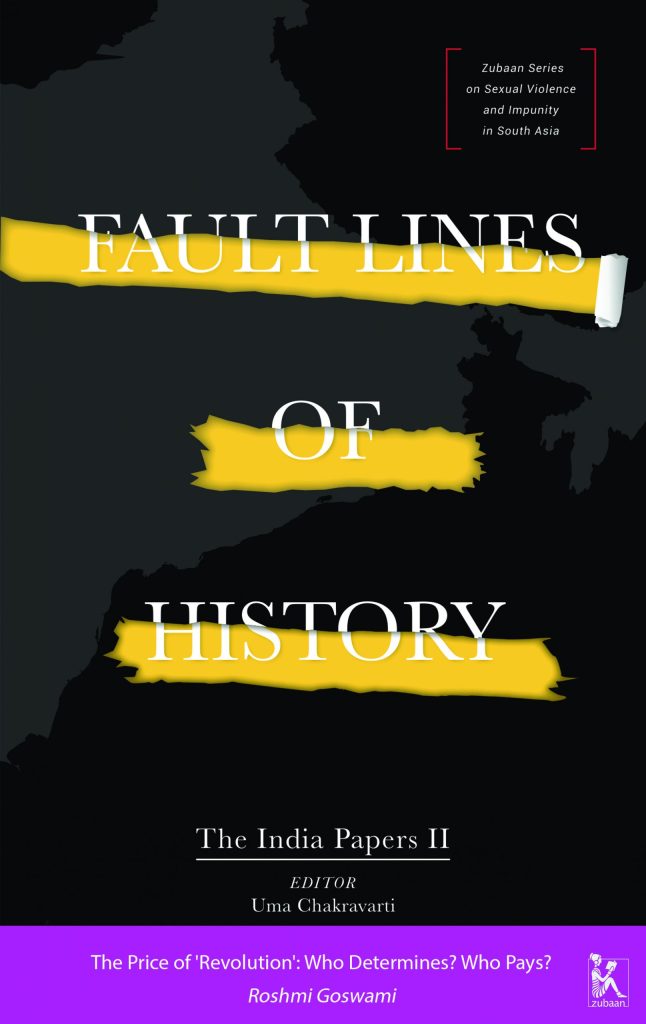
This essay looks at case studies of sexual violence against women combatants and sympathizers in Northeast India to examine the special vulnerability of this category of women to sexual violence. As Roshmi Goswami points out, at present there are over fifty armed groups in the region making a plethora of demands and situated at different stages in the continuum of conflict. The author argues that women have borne the brunt of this ongoing turmoil—whether they have been specifically targeted by security forces or rival militant groups. Sexual violence is deployed to torture, humiliate people or to punish and humiliate an enemy group or a community that is perceived to be the ‘other’.
The case studies include those of Thangjam Manorama, Snehalata Duara and Roshmi Bora. These cases bring out how issues of sexual violence often remain outside the purview of ‘peace negotiations’, and how the legal regime has provided impunity for armed forces. Goswami also dwells on how the relative or perceived agency of women combatants ends when the ‘militant’s uniform’ is given up. Ex-combatants are often deeply traumatized having experienced and seen violence at very close quarters, and are in need of long term gender-sensitive psychosocial counselling, which is hardly available in reintegration packages and schemes.
The author concludes by questioning the term ‘post-conflict reconstruction’, pointing out its problematic position: ‘reconstruction’ implies restoration to a former status quo that might not be beneficial to women. She states that for feminist peace activists, genuine conflict transformation necessarily brings the notions of justice and peace together, which would entail correcting inequalities and discrimination while ‘reconstructing’. Continue Reading The Price of ‘Revolution’: Who Determines? Who Pays?
Continue readingCategories
Filter by
Product tags
academic
AFSPA
anthology
ashoka series
Bangladesh
caste
conflict
culture
Dalit women
e-essays
feminism
Feminist literature
Fiction
gender
gender studies
health
history
impunity
India
Kashmir
legislation
Literary Fiction
Memoir
Nagaland
New Editions
Non-Fiction
Northeast India
Pakistan
Poetry
sexual violence
Short Stories
sociology
South Asia
state impunity
SVI
SVI Project
Top Ten
translation
violence
violence against women
women's activism
women writer
women writers
young zubaan
Zubaan Classics