No products in the cart.
Return To Shop

Books, Books from the North East, Books from the North East, e-Books, Fiction, Fiction, New Releases, New Releases, Non-Fiction, Non-Fiction
The Many That I Am: Writings from Nagaland
Price range: ₹ 350 through ₹ 495
A grandmother’s tattoos, the advent of Christianity, stories woven into fabrics, a tradition of orality, the imposition of a ‘new’ language, a history of war and conflict: all this and much more informs the writers and artists in this book. Filmmaker and writer Anungla Zoe Longkumer brings together here, for the first time, a remarkable set of stories, poems, first-person narratives and visuals that reflect the many facets of women’s writing in Nagaland.Written in English, a language the Nagas — who had no tradition of written literature — made their own after the Church came to Nagaland, each piece speaks of women’s many journeys to reclaim their pasts and understand their complex present.
Contributors: Abokali Jimomi, Ahikali Swu, Aniho Chishi, Anungla Zoe Longkumer, Avinuo Kire, Beni Sumer Yanthan, Dzuvinguno Dorothy Chasie, Easterine Kire, Em Em El, Emisenla Jamir, Eyingbeni Humtsoe-Nienu, Hekali Zhimomi, Iris Yingzen, Jungmayangla Longkumer, Kutoli N, Licca Kiho, Limatola Longkumer, Manenjungla Aier, Marianne Murry, Moaso Aier, Narola Changkija, Neikehienuo Mepfhüo, Nini Lungalang, Phejin Konyak, rōzumarī saṃsāra, Sirawon Tulisen Khathing, Metongla Aier, Talilula, Temsula Ao, Thejakhrienuo Yhome, Theyie Keditsu, Vishü Rita Krocha.
ANUNGLA ZOE LONGKUMER can best be described as a free individual discovering her way through creative pursuits in music, writing, filmmaking, and folk traditions. Having travelled and lived outside Nagaland during most of her life, she is currently based in Dimapur, Nagaland, where she freelances doing some content editing, music and filmmaking. She is the author of Folklore of Eastern Nagaland (2017), that comprises translations of folktales, folk songs and real-life accounts, collected from the six tribes who inhabit the more remote districts of Eastern Nagaland.
Select format
This product has multiple variants. The options may be chosen on the product page Contributors: Abokali Jimomi, Ahikali Swu, Aniho Chishi, Anungla Zoe Longkumer, Avinuo Kire, Beni Sumer Yanthan, Dzuvinguno Dorothy Chasie, Easterine Kire, Em Em El, Emisenla Jamir, Eyingbeni Humtsoe-Nienu, Hekali Zhimomi, Iris Yingzen, Jungmayangla Longkumer, Kutoli N, Licca Kiho, Limatola Longkumer, Manenjungla Aier, Marianne Murry, Moaso Aier, Narola Changkija, Neikehienuo Mepfhüo, Nini Lungalang, Phejin Konyak, rōzumarī saṃsāra, Sirawon Tulisen Khathing, Metongla Aier, Talilula, Temsula Ao, Thejakhrienuo Yhome, Theyie Keditsu, Vishü Rita Krocha.
ANUNGLA ZOE LONGKUMER can best be described as a free individual discovering her way through creative pursuits in music, writing, filmmaking, and folk traditions. Having travelled and lived outside Nagaland during most of her life, she is currently based in Dimapur, Nagaland, where she freelances doing some content editing, music and filmmaking. She is the author of Folklore of Eastern Nagaland (2017), that comprises translations of folktales, folk songs and real-life accounts, collected from the six tribes who inhabit the more remote districts of Eastern Nagaland.

Books, Books from the North East, Books from the North East, e-Books, Fiction, Fiction, New Releases, New Releases
Name Place Animal Thing
Price range: ₹ 300 through ₹ 495Shortlisted for the JCB Prize for Literature 2021!
'There were no longer any signs of the house we stayed in, no doorway with its low entrance, no weeping willow or cryptomeria tree from which the caterpillars fell. The ramshackle cottage that housed my earliest friends and shaped my memories lay bare and forgotten. Only the flying termites remained, fluttering below the street lights outside the property.'In this novella, Daribha Lyndem gently lifts the curtain on the coming of age of a young Khasi woman and the politically charged city of Shillong in which she lives. Like the beloved school game from which it takes its name, the book meanders through ages, lives and places. The interconnected stories build on each other to cover the breadth of a childhood, and move into the precarious awareness of adulthood.A shining debut, Name Place Animal Thing is an elegant examination of the porous boundaries between the adult world and that of a child’s.
DARIBHA LYNDEM is a writer and civil servant from Shillong. Name Place Animal Thing is her first book. She currently works with the Indian Revenue Service and a Deputy Commissioner of Customs. Daribha now lives with two cats and a husband in Mumbai.

Books, Books from the North East, Books from the North East, e-Books, Fiction, Fiction, Non-Fiction, Non-Fiction
The Inheritance of Words: Writings from Arunachal Pradesh
Price range: ₹ 350 through ₹ 495
A first of its kind, this book brings together the writings of women from Arunachal Pradesh in Northeast India. Home to many different tribes and scores of languages and dialects, once known as a ‘frontier’ state, Arunachal Pradesh began to see major change after it opened up to tourism and once the Indian State introduced Hindi as its official language. In this volume, Mamang Dai, one of Arunachal’s best known writers, brings together new and established voices on subjects as varied as identity, home, belonging, language, Shamanism, folk culture, orality and more. Much of what has been handed down orally, through festivals, epic narratives, the performance of rituals by Shamans and rhapsodists, revered as guardians of collective and tribal memory, is captured here in the words of young poets and writers, as well as artists and illustrators, as they trace their heritage, listen to stories and render them in newer forms of expression.
Contributors: Ayinam Ering | Bhanu Tatak | Chasoom Bosai | Doirangsi Kri | Gedak Angu | Gyati T. M. Ampi | Ing Perme | Jamuna Bini | Karry Padu | Kolpi Dai | Leki Thungon | Mamang Dai | Millo Ankha| Mishimbu Miri | Nellie N. Manpoong | Ngurang Reena | Nomi Maga Gumro | Omili Borang | Ponung Ering Angu | Rebom Belo | Rinchin Choden | Ronnie Nido | Samy Moyong | Stuti Mamen Lowang | Subi Taba | Takhe Moni | Tine Mena | Toko Anu | Tolum Chumchum | Tongam Rina | Tunung Tabing | Yaniam Chukhu | Yater Nyokir
MAMANG DAI is a poet and novelist. A former journalist, she has worked with World Wildlife Fund in the Eastern Himalaya Biodiversity Hotspots programme. Her first book, Arunachal Pradesh: The Hidden Land, received the State Verrier Elwin Prize. She is a recipient of the Padma Shri (Literature and Education) and the Sahitya Akademi Award. She currently lives in Itanagar, Arunachal Pradesh.
Select format
This product has multiple variants. The options may be chosen on the product page Contributors: Ayinam Ering | Bhanu Tatak | Chasoom Bosai | Doirangsi Kri | Gedak Angu | Gyati T. M. Ampi | Ing Perme | Jamuna Bini | Karry Padu | Kolpi Dai | Leki Thungon | Mamang Dai | Millo Ankha| Mishimbu Miri | Nellie N. Manpoong | Ngurang Reena | Nomi Maga Gumro | Omili Borang | Ponung Ering Angu | Rebom Belo | Rinchin Choden | Ronnie Nido | Samy Moyong | Stuti Mamen Lowang | Subi Taba | Takhe Moni | Tine Mena | Toko Anu | Tolum Chumchum | Tongam Rina | Tunung Tabing | Yaniam Chukhu | Yater Nyokir
MAMANG DAI is a poet and novelist. A former journalist, she has worked with World Wildlife Fund in the Eastern Himalaya Biodiversity Hotspots programme. Her first book, Arunachal Pradesh: The Hidden Land, received the State Verrier Elwin Prize. She is a recipient of the Padma Shri (Literature and Education) and the Sahitya Akademi Award. She currently lives in Itanagar, Arunachal Pradesh.

Books, Books from the North East, Books from the North East, e-Books, Fiction, Fiction, New Releases, New Releases
We Come From Mist: Writings from Meghalaya
Price range: ₹ 395 through ₹ 595
This book is an offering—of prose, poetry, musical lyrics, and visual art—by the women of Meghalaya in Northeast India. One of the smallest states in the country, but also, one of the most beautiful, Meghalaya is blessed with landscapes that mesmerize and inspire song and story. In the not-so-distant past, though, it has also seen political turbulence and civil unrest, and many of the works here capture that quiet unease—in homes and kitchens, in market-places and public taxis. Yet this anthology is also a celebration. Of wisdom and joy, of queerness and sisterhood, of mothers and feminine bodies, of home and hearths. Of voices new and established. Brought together in one volume by Janice Pariat, a novelist and poet from these hills. Here, we sit together around a fire, and sing, and weep, and dance, and tell stories. We dream of where we came from, the hills, the mist, and dream of what else we are still yet to discover.
Contributors: Amanda Basaiamoit | Amanda Christie Tongper | Amrita Dutta | Angel Konthoujam | Anjum Hasan | Antara Roy Oruganti | Balaiamon Kharngapkynta | Bymonmiralda B Lato | Careen Joplin Langstieh | Cheryl Rynjah | Clarissa Giri | Daiaphi Lamare aka Reble | Daiarisa Rumnong | Daribha Lyndem | Esther Larisa David | Evangelene Nongkhlaw | Fileona Dkhar | Jobeth Ann Warjri | Karen L. Donoghue | Lahundashisha Kharshiing | Longnam Wanbiang Kharpuri | Maya Mawlong | Menty Jamir | Reeju Ray | Samanda Nora Pyngrope | Satarupa Paul | Saweini Laloo
JANICE PARIAT is the author of Boats on Land: A Collection of Short Stories and Seahorse: A Novel. She was awarded the Sahitya Akademi’s Young Writer Award and the Crossword Book Award for Fiction in 2013. Her novella The Nine Chambered-Heart, bestselling in India, was published in the UK and in ten other languages including Italian, Spanish, French, and German. Her most recent work Everything the Light Touches has been widely acclaimed. She lives between Shillong and New Delhi with a cat of many names.
Select format
This product has multiple variants. The options may be chosen on the product page Contributors: Amanda Basaiamoit | Amanda Christie Tongper | Amrita Dutta | Angel Konthoujam | Anjum Hasan | Antara Roy Oruganti | Balaiamon Kharngapkynta | Bymonmiralda B Lato | Careen Joplin Langstieh | Cheryl Rynjah | Clarissa Giri | Daiaphi Lamare aka Reble | Daiarisa Rumnong | Daribha Lyndem | Esther Larisa David | Evangelene Nongkhlaw | Fileona Dkhar | Jobeth Ann Warjri | Karen L. Donoghue | Lahundashisha Kharshiing | Longnam Wanbiang Kharpuri | Maya Mawlong | Menty Jamir | Reeju Ray | Samanda Nora Pyngrope | Satarupa Paul | Saweini Laloo
JANICE PARIAT is the author of Boats on Land: A Collection of Short Stories and Seahorse: A Novel. She was awarded the Sahitya Akademi’s Young Writer Award and the Crossword Book Award for Fiction in 2013. Her novella The Nine Chambered-Heart, bestselling in India, was published in the UK and in ten other languages including Italian, Spanish, French, and German. Her most recent work Everything the Light Touches has been widely acclaimed. She lives between Shillong and New Delhi with a cat of many names.
In stock

Books, Books from the North East, Books from the North East, e-Books, Feminism In India Recommends, Feminism In India Recommends, Fiction, Fiction
When the River Sleeps
Price range: ₹ 235 through ₹ 495
Winner of the Hindu Prize for Fiction, 2015.A lone hunter, Vilie, sets out to find the river of his dreams: to wrest from its sleeping waters a stone that will give him untold power. It is a dangerous quest, for not only must he overcome unquiet spirits, vengeful sorceresses and daemons of the forest, there are men – armed with guns – on his trail. Easterine Kire’s novel transports the reader to the remote mountains of Nagaland, a place alive with natural wonder and supernatural enchantment. As Vilie treks through the forest on the trail of his dream, we are also swept along in this powerful narrative and walk alongside him in a world where the spirits are every bit as real as men and women, and where danger – or salvation – lies at every turn.Kire’s powerful narrative invites us into the lives and hearts of the people of Nagaland: the rituals and beliefs, their reverence for the land, their close-knit communities – the rhythms of a life lived in harmony with their natural surroundings. It is against this spellbinding backdrop that Kire tells the story of a solitary man driven by the mysterious pull of a dream, who must overcome weretigers and malignant widow-spirits in the search for his heart’s desire.
Select format
This product has multiple variants. The options may be chosen on the product page “...reminiscent of Marquez’s magic realism and Leslie Silko’s Native-American story-telling. At the end, though, this is a Naga story, unmistakably so, in its sense of place, time, and oral traditions.”
Paulus Pimomo, Central Washington University, USA

Books, Books from the North East, Books from the North East, e-Books, Fiction, Fiction, New Releases
A Terrible Matriarchy
Price range: ₹ 248 through ₹ 595"I was the youngest in a family of five children. I sometimes felt I was an afterthought, and maybe Father and Mother didn't quite know what to do with me. Also, because I was a girl after four boys they never seemed to be sure whether to buy me girls' clothing or let me wear leftover boys' clothing."Young Dielieno is five years old when she is sent off to live with her disciplinarian grandmother who wants her to grow up to be a good Naga wife and mother. According to Grandmother, girls didn't need an education, they didn't need love and affection or time to play or even a good piece of meat with their gravy! Naturally Dielieno hates her with a vengeance.This is the evocative tale of a young girl growing up in a traditional society in India's Northeast, which is in the midst of tremendous change.Easterine Kire writes about a place and a people that she knows well and is a part of and brings to the storytelling a lyrical beauty which can on occasion chill the reader with its realistic portrayals of the spirits of the dead that inhabit the quiet hills and valleys of Nagaland._____________________________________________________________________________________EASTERINE KIRE has written and published a number of short stories and anthologies of poetry. She was a guest of Norwegian PEN from 2005-2007 and during this period, travelled and spoke extensively on the idea of self-exile, writing in another country, Naga literature and the conflicted state of Nagaland. She is author of A Naga Village Remembered, Mari and Bitter Wormwood.

Books, Books from the North East, Books from the North East, e-Books, Fiction, Fiction, New Releases, New Releases, Non-Fiction, Non-Fiction
Crafting the Word: Writings from Manipur
Price range: ₹ 248 through ₹ 495
Manipur has a rich tradition of folk and oral narratives, as well as written texts dating from as early as in 8th Century AD. It was however only in the second half of the twentieth century that women began writing and publishing their works. Today, women's writing forms a vibrant part of Manipuri literature, and their voices are amplified through their coming together as an all-woman literary group. Put together in discussions and workshops by Thingnam Anjulika Samom, Crafting the Word captures a region steeped in conservative patriarchy and at the centre of an armed conflict. It is also a place, however, where women’s activism has been at the forefront of peace-making and where their contributions in informal commerce and trade hold together the economy of daily life.
Contributors: Arambam Ongbi Memchoubi, Aruna Nahakpam, Ayung Tampakleima Raikhan, Bimabati Thiyam Ongbi, Binodini, Chongtham (o) Subadani, Chongtham Jamini Devi, Guru Aribam Ghanapriya Devi, Haobam Satyabati Khundrakpam ongbi, Haobijam Prema Chanu, Koijam Santibala, Kshetrimayum Subadani, Kundo Yumnam, Lairenlakpam Ibemhal, Moirangthem Borkanya, Mufidun Nesha, Natalie Nk, Nee Devi, Nepram Maya Devi, Ningombam Sunita, Ningombam Surma, RK Sanahanbi (Likkhombi) Chanu, Sanatombi Ningombam, Sanjembam Bhanumati Devi, Satyabati Ningombam, Tonjam Sarojini Chanu, Yuimi VashumTranslators: Akoijam Sunita, Bobo Khuraijam, Kundo Yumnam, L. Somi Roy, Natasha Elangbam, Paonam Thoibi, Sapam Sweetie, Shreema Ningombam, Soibam Haripriya, Sonia Wahengbam, Thingnam Anjulika Samom
THINGNAM ANJULIKA SAMOM is an independent journalist, writer and translator based in Imphal, Manipur. Her journalistic writing focusing on gender, con ict and developmental issues in Manipur has been published in many online and print publications in India as well as outside the country. She is the recipient of the Laadli Media Award for Gender Sensitivity 2010–11 (Eastern Region). She also translates literary works from Manipuri to English and was given the Katha Award for Translation in 2004. A few of her poems are part of the anthology Centrepiece (2017) published by Zubaan.
Select format
This product has multiple variants. The options may be chosen on the product page Contributors: Arambam Ongbi Memchoubi, Aruna Nahakpam, Ayung Tampakleima Raikhan, Bimabati Thiyam Ongbi, Binodini, Chongtham (o) Subadani, Chongtham Jamini Devi, Guru Aribam Ghanapriya Devi, Haobam Satyabati Khundrakpam ongbi, Haobijam Prema Chanu, Koijam Santibala, Kshetrimayum Subadani, Kundo Yumnam, Lairenlakpam Ibemhal, Moirangthem Borkanya, Mufidun Nesha, Natalie Nk, Nee Devi, Nepram Maya Devi, Ningombam Sunita, Ningombam Surma, RK Sanahanbi (Likkhombi) Chanu, Sanatombi Ningombam, Sanjembam Bhanumati Devi, Satyabati Ningombam, Tonjam Sarojini Chanu, Yuimi VashumTranslators: Akoijam Sunita, Bobo Khuraijam, Kundo Yumnam, L. Somi Roy, Natasha Elangbam, Paonam Thoibi, Sapam Sweetie, Shreema Ningombam, Soibam Haripriya, Sonia Wahengbam, Thingnam Anjulika Samom
THINGNAM ANJULIKA SAMOM is an independent journalist, writer and translator based in Imphal, Manipur. Her journalistic writing focusing on gender, con ict and developmental issues in Manipur has been published in many online and print publications in India as well as outside the country. She is the recipient of the Laadli Media Award for Gender Sensitivity 2010–11 (Eastern Region). She also translates literary works from Manipuri to English and was given the Katha Award for Translation in 2004. A few of her poems are part of the anthology Centrepiece (2017) published by Zubaan.
Out of stock

Books, Books from the North East, Books from the North East, Feminism In India Recommends, Fiction, Zubaan-Penguin Joint List
These Hills Called Home: Stories from a War Zone (Zubaan Classics)
₹ 325
This touching and at times harrowing glimpse into the conflict-ridden Nagaland is now available in a brand new paperback edition as part of the Zubaan Classics series to celebrate Zubaan's 10th anniversary.More than half a century of bloodshed has marked the history of the Naga people who live in the troubled northeastern region of India. Their struggle for an independent Nagaland and their continuing search for identity provides the backdrop for the stories that make up this unusual collection. Describing how ordinary people cope with violence, how they negotiate power, and force, how they seek and find safe spaces and enjoyment in the midst of terror, the author details a way of life under threat from the forces of modernization and war.No one -- the young, the old, the ordinary housewife, the willing partner, the militant who takes to the gun, and the young woman who sings even as she is being raped -- is untouched by the violence. Theirs are the stories that form the subtext of the struggles that lie at the internal fault lines of the Indian nation-state. These are stories that speak movingly of home, country, nation, nationality, identity, and direct the reader to the urgency of the issues that lie at their heart.
TEMSULA AO is the Dean, School of Humanities and Education, North Eastern Hill University, Shillong.
Read more
"Temsula Ao, like many of her predecessors has successfully described the experiences of her people. The struggle for freedom and the search for identity have been discussed by many writers and these are pivotal themes of those who had to pay a heavy price for freedom. To this end Temsula Ao must be praised for her successful attempt." -- Shagufta Yasmeen, Dawn
TEMSULA AO is the Dean, School of Humanities and Education, North Eastern Hill University, Shillong.

Books, Books from the North East, Books from the North East, e-Books, New Releases, New Releases, Non-Fiction, Non-Fiction
Food Journeys: Stories from the Heart
Price range: ₹ 895 through ₹ 1,500Food Journeys is a powerful collection that draws on personal experiences, and the meaning of grief, rage, solidarity, and life. Feminist anthropologist Dolly Kikon and peace researcher Joel Rodrigues present a wide-ranging set of stories and essays accompanied by recipes. They bring together poets, activists, artists, writers, and researchers who explore how food and eating allow us to find joy and strength while navigating a violent history of militarization in Northeast India. Food Journeys takes us to the tea plantations of Assam, the lofty mountains of Sikkim, the homes of a brewer and a baker in Nagaland, a chef’s journey from Meghalaya, a trip to the paddy fields in Bangladesh, and many more sites, to reveal why people from Northeast India intimately care about what they eat and consider food an integral part of their history, politics, and community. Deliciously feminist and bold, Food Journeys is both an invitation and a challenge to recognize gender and lived experiences as critical aspects of political life.
DOLLY KIKON is an anthropologist whose work focuses on the political economy of extractive resources, militarisation, migration, indigeneity, food cultures and human rights in India. She is the author of Life and Dignity: Women’s Testimonies of Sexual Violence in Dimapur (Nagaland) (2015); Living with Oil and Coal: Resource Politics and Militarisation in Northeast India (2019); Leaving the Land: Indigenous Migration and Affective Labour in India (2019); Ceasefire City: Militarism, Capitalism, and Urbanism in Dimapur (2021); and Seeds and Food Sovereignty: Eastern Himalayan Experiences (2023).JOEL RODRIGUES is the author of Seeds and Food Sovereignty: Eastern Himalayan Experiences (2023). Joel is a doctoral researcher at the Department of Social Anthropology, Stockholm University. His writings have been featured in Gastronomica, Morung Express, and ‘Raiot.in’. He has a bachelor's degree in mass media, and a master's in peace and conflict studies. His peace research work engages with law, violence, memory, food, and media. Born in Mumbai, Joel has lived in Northeast India for a decade now.

Books, Books from the North East, Books from the North East, e-Books, Feminism In India Recommends, Fiction, New Releases, Non-Fiction
Centrepiece: New Writing and Art from Northeast India
Price range: ₹ 500 through ₹ 1,000
This book brings you a wealth of stories, in words and images, from a part of India known as the Northeast, a term that is widely contested for the ways in which it homogenizes a region of great diversity. It is also a term that has come to be a marker of identity and solidarity by many who are of the region. Here, 21 writers and artists look at the idea of ‘work’ — from street hawking to beer brewing, from mothering to dung collection — and describe their lives or those of others with humour and compassion. Parismita Singh’s wonderful compilation of the works of women asks: what are the different ways of telling a story? What if we were to attempt these tellings through poetry and portraits and essays, older traditions like textile art and applique and new genres like hashtag poetry tapped into a smartphone? Where would it take us, what would the world look like?______________________________________________________________________________________
Select format
This product has multiple variants. The options may be chosen on the product page PARISMITA SINGH is a writer, graphic novelist and educationist. Her graphic novel The Hotel at the End of the World was shortlisted for the Shakti Bhatt First Book Award (2009-10). She helped conceptualise the Pao Anthology of Comics. Her publications include graphic novels for children Mara and the Clay Cows, Crab Chronicles and Fat King Thin Dog. She has been working on a primary school education project in Assam with the NGO Pratham since 2009.
Contributors: Zubeni Lotha | Minam Apang | Alyen Leeachum Foning | Aheli Moitra | Soibam Haripriya | Gertrude Lamare | Rini Barman | Nitoo Das | Thingnam Anjulika Samom | Parismita Singh | Dolly Kikon | Ayangbe Mannen | Aungmakhai Chak | Jacqueline Zote | Meena Laishram | Prashansa Gurung | Shreya Debi and Bilseng R Marak | Mona Zote | Nabina Das | Mamang Dai | Sanatombi Ningombam | Kundo YumnamIn stock
Books, Books from the North East, Books from the North East, e-Books, New Releases, New Releases, Non-Fiction, Non-Fiction
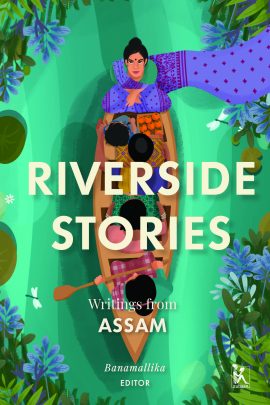
Riverside Stories: Writings from Assam
Price range: ₹ 480 through ₹ 595Stories abound in Assam’s fields, ponds, rivers, forests, hills and cities. Most of its people wear each other’s clothes, eat each other’s food and speak each other’s languages. Diversity and amalgamation are the primarily identifiable elements of people from Assam. Yet, everyday patriarchy and politics of boundaries have resulted in so much confusion and conflict. Thankfully, we are witnessing emerging voices of people who experience life differently because of their own identities and locations and propose an inclusive space for us all. The women and transpeople who have contributed to Riverside Stories come from this diversity and bring their stories of multiple experiences from Assam to the world. This collection of fiction, non-fiction, poetry and visual stories, puts on record the experiences of the self, the very personal, within homes, in the environment, with politics, and with disappointments, desires, hopes and memories for a future. In putting together this anthology, it is our hope that we have complicated—more than it already is—the notion of whose and which stories can be told.
______________________________________________________________________________________BANAMALLIKA is mostly a disheartened feminist activist from Assam. She has used storytelling as a tool for questioning power in her personal life and professional work. To her ever-expanding array of activities, she has added drawing, filmmaking, entrepreneurship, gardening, theatre, cooking, research, writing and, very recently, playing with clay. She draws her sustenance from the feminist movement and its solidarity. She is currently fantasising about not having to write another proposal or project report and living on a farm on a foothill by a spring.

The Keepers of Knowledge: Writings from Mizoram
Price range: ₹ 445 through ₹ 695
An old Mizo proverb holds that a woman’s wisdom takes her only as far as the village stream. Such proverbs and beliefs have weighed heavily on the journeys of Mizo women such that even today, more than a century after the introduction of the written alphabet in Mizoram, there are barely any narratives by women in the existing body of published texts. Women’s limited access to speaking out in the time or orality sadly did not transform into opportunities to write and publish. And yet, when the editors of this volume—perhaps the first ever such anthology in the state—set out to search for writings by women, they were delighted and surprised to find a wealth of stories, narratives, personal accounts, poems, art and more. These now grace the pages of this remarkable first-of-its-kind book.
Contributors: Babie Remi | Baby Lalsangzeli | Catherine Lalhruaitluangi Chhangte | Cherrie Lalnunziri Chhangte | Cindy Zothanpuii Tlau | Dawngi Chawngthu | Debbie Rinawmi | Diddo Khiangte | Hannah Lalhlanpuii | Hmingthanzuali | Jacqueline Zote | Janet Lalremsangi | Jerusha Lalremruatfeli | Kristina Z. Zama | Laldinpuii | Lalhlimpuii Pachuau | Lalhmangaihi Chhakchhuak | Lalhming Mawii (Amoii) | Lalhriatchhungi Ralte | Lalramnghaki Ralte | Lalremruati Ngente | Lalrinmawii (Mamawii) Khiangte | Lalrofeli | Lalropari (Pari) | Lalruatkimi Jongte | Lalsangpuii | Lalthangmawii Chhangte | Lalthansangi Fanai | Lalthansangi Ralte | L. V. Lalsangkimi | Malsawmi Jacob | Mary Vanlalthanpuii | Rebecca Lalhmangaihzuali | Rosaline Varsangzuali | Zirtei Mangpa | Zohmangaihi | Zualteii Poonte
HMINGTHANZUALI teaches at the Department of History & Ethnography, Mizoram University where she has spent over a decade. She has a PhD from Hyderabad Central University. She has published a number of research papers on gender and women’s history in northeast India and has presented her work at academic conferences in India and abroad. She is a recipient of the Zubaan-Sasakawa Peace Foundation Grant for Young Researchers from the Northeast (2019-2020).MARY VANLALTHANPUII has been a research fellow at the Asiatic Society, Kolkata (2017-2021) and was a part time lecturer at Loreto College, Kolkata. She completed her PhD from Calcutta University. Her areas of interest include the role of women in formal politics and the informal politics of the Church, and she has published and presented nationally and internationally on these. She is a recipient of the Zubaan-Sasakawa Peace Foundation Grant for Young Researchers from the Northeast (2018-2019).
Select format
This product has multiple variants. The options may be chosen on the product page Contributors: Babie Remi | Baby Lalsangzeli | Catherine Lalhruaitluangi Chhangte | Cherrie Lalnunziri Chhangte | Cindy Zothanpuii Tlau | Dawngi Chawngthu | Debbie Rinawmi | Diddo Khiangte | Hannah Lalhlanpuii | Hmingthanzuali | Jacqueline Zote | Janet Lalremsangi | Jerusha Lalremruatfeli | Kristina Z. Zama | Laldinpuii | Lalhlimpuii Pachuau | Lalhmangaihi Chhakchhuak | Lalhming Mawii (Amoii) | Lalhriatchhungi Ralte | Lalramnghaki Ralte | Lalremruati Ngente | Lalrinmawii (Mamawii) Khiangte | Lalrofeli | Lalropari (Pari) | Lalruatkimi Jongte | Lalsangpuii | Lalthangmawii Chhangte | Lalthansangi Fanai | Lalthansangi Ralte | L. V. Lalsangkimi | Malsawmi Jacob | Mary Vanlalthanpuii | Rebecca Lalhmangaihzuali | Rosaline Varsangzuali | Zirtei Mangpa | Zohmangaihi | Zualteii Poonte
HMINGTHANZUALI teaches at the Department of History & Ethnography, Mizoram University where she has spent over a decade. She has a PhD from Hyderabad Central University. She has published a number of research papers on gender and women’s history in northeast India and has presented her work at academic conferences in India and abroad. She is a recipient of the Zubaan-Sasakawa Peace Foundation Grant for Young Researchers from the Northeast (2019-2020).MARY VANLALTHANPUII has been a research fellow at the Asiatic Society, Kolkata (2017-2021) and was a part time lecturer at Loreto College, Kolkata. She completed her PhD from Calcutta University. Her areas of interest include the role of women in formal politics and the informal politics of the Church, and she has published and presented nationally and internationally on these. She is a recipient of the Zubaan-Sasakawa Peace Foundation Grant for Young Researchers from the Northeast (2018-2019).