No products in the cart.
Return To Shop
In stock

Matriarchs, Cows and Epic Villains
₹ 499The figures in Suniti Namjoshi’s compelling stories range from shape-shifting cows to ruling mothers, from sage donkeys to epic villains. This substantial collection includes fables old and new, lyric poems and epigrams, long narratives and short introductory comments. We also complete the Ravana trilogy with ‘Shupi’s Choices’ and ‘Kumbh’. The villainous siblings are ridiculous at times, but they also show us our own shortcomings.
Funny, irreverent, tongue-in-cheek, joyful and profound, these tales are a delight to read. Matriarchs, Cows and Epic Villains is a selection of Suniti Namjoshi’s work, which continues to raise questions about how we deal with our destiny as human beings and confront our inadequacies.______________________________________________________________________________________Suniti Namjoshi is a poet, fabulist and children’s writer with over forty books to her name. After a stint in the Indian Administrative Service, Namjoshi moved to Canada where she earned a PhD at McGill University, taught at the University of Toronto for many years, and then moved on to doing what she loves best—writing. A selection of her works is published in The Fabulous Feminist (2012). Her books include Suki (2013), a memoir about her beloved cat; Foxy Aesop: On the Edge (2018), which asks point-blank whether it is the function of writers to save the world; and Dangerous Pursuits (2022), which contains ‘Bad People’, the first part of the trilogy about Ravana and his siblings. Continue Reading Matriarchs, Cows and Epic VillainsIn stock

Women Writing History: Three Generations
Price range: ₹ 420 through ₹ 595Three historians. Three generations. Spanning nearly a century of work, Romila Thapar, Kumkum Roy and Preeti Gulati, reflect on their lives and their engagement with one of the most demanding, and most crucial, disciplines of our times. Personal narratives of growing up—learning about history, charting new and distinct paths as researchers, the challenges of teaching—meld effortlessly into a larger and complex changing context: the emergence of an independent nation, of movements that have helped shape the process, and of resistance. To what extent, the authors ask, have feminisms made a difference? Can these interventions lead to redefining or rejuvenating the discipline, transforming it into a more inclusive space where diverse voices can be acknowledged and heard with respect and understanding? These and other questions inform this accessible and lucid text.
______________________________________________________________________________________ROMILA THAPAR is Professor Emerita, Ancient History, at Jawaharlal Nehru University, New Delhi. Her special contribution to history is the use of social-historical methods to understand change in the mid-first millennium BCE in northern India. Among her many publications are Asoka and the Decline of the Mauryas (1961), From Lineage to State (1984), and Early India: From Origins to AD 1300 (2002). She has been honoured with doctorates from the Universities of Chicago, Oxford, Edinburgh, Calcutta, Hyderabad, Pretoria, Brown University and the Institut National des Langues et Civilisations Orientales. She is an Honorary Fellow of the School of Oriental and African Studies in London from where she also received her PhD, and a Foreign Honorary Member of the American Academy of Arts and Sciences. In 2008, she shared the US Library of Congress’s Kluge Prize for lifetime achievement in the humanities and social sciences.
KUMKUM ROY did her PhD in Ancient Indian History from the Centre for Historical Studies, Jawaharlal Nehru University, New Delhi. She taught at Satyawati Co-educational College, Delhi University, and at the Centre for Historical Studies, Jawaharlal Nehru University. With a specialisation in ancient Indian history, her areas of interest include histories of political institutions and processes and issues of gender. Among her publications are The Emergence of Monarchy in North India (1994), A Historical Dictionary of Ancient India (2009) and The Power of Gender and the Gender of Power (2010). She is also interested in issues of pedagogy at various levels.
PREETI GULATI teaches History at Krea University. Her research interests lie in early Indian texts, everyday practices, and the history of institutions. She is currently working on a monograph on food and power in early India, which is based on her PhD thesis.
Continue Reading Women Writing History: Three GenerationsIn stock
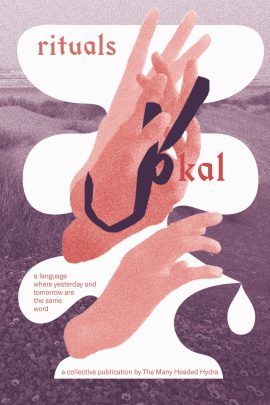
Kal Rituals
₹ 795The first in a series of publications emerging from the transoceanic platform kal, RITUALS proposes queer and trans-feminist ecologies, embodiments and mythmaking. The contributions trace and disrupt cross-colonial legacies through bodies of water lapping at the shorelines of the Arabian Sea, the Indian Ocean, and the Atlantic. kal RITUALS is an ode to transterritorial alliances that disrupt binary contours of time and being.
kal RITUALS assembles practices of queer world building in extended pandemic time, amidst deep ecological and social transformations, offering an expression of anti-colonial resistance and joy.
_____________________________________________________________________________________kal RITUALS is a collective work by The Many Headed Hydra. Connecting art, research and publishing, The Many Headed Hydra magazines engage bodies of water as ecological collectivities and tidal archives to set resistant knowledges into motion.
This publication emerges from a language where yesterday and tomorrow are the same word. kal., an self-organized artistic platform spanning Karachi, Colombo, Berlin and beyond.
Continue Reading Kal RitualsIn stock

Feminist Frames: Gender, Space and Violence in India
Price range: ₹ 625 through ₹ 895This book revisits approaches to South Asian feminist politics through the lens of shared historical memories and their social spatialisation. The author looks at borderlands, socialist visions of internationalism, cultures of travel, theatre history, artist-activist performances, and connected histories of discrete geo-political formations. Locating the book’s spatial context in Bengal—for its long tradition of militant movements and its historical cross-border connections—Sinha Roy attempts to release the spatial into South Asian feminism and historicise the space and place of Bengal in a dynamic relationship with time. She argues that in addition to plotting a temporally progressive chronological story of gender, violence and love in the inert space of Bengal (bracketed by national and international borders), the practices of spatialisation play an active role as temporal emplotment, in organising and prioritising the major place-based arguments.
______________________________________________________________________________________MALLARIKA SINHA ROY is an assistant professor at the Centre for Women’s Studies, Jawaharlal Nehru University, New Delhi. She is a recipient of the Erasmus Fellowship, University of Cologne, and a post-doctoral fellowship from the Danish Agency for Science, Technology and Innovation. She has been co-principal investigator in the University Grants Commission project ‘Traces of the Global: Displacement, Memory, Cultural Citizenship 2014-19’ and a British Academy project, ‘Cultures of the Left’. She has many publications to her credit, including Gender and Radical Politics in India: Magic Moments of Naxalbari (1967-1975), Utpal Dutt and Political Theatre in Postcolonial India (2024), and she is co-editor with Papori Bora, Vijaya Rao and Shambhavi Prakash, of Displacement and Citizenship: Histories and Memories of Exclusion (2020). She has published in many peer-reviewed journals and has contributed chapters to various books.
Continue Reading Feminist Frames: Gender, Space and Violence in IndiaIn stock

Framing Portraits, Binding Albums: Family Photographs in India
Price range: ₹ 875 through ₹ 1,250Long neglected in academic discourse in India, family photographs make a silent contribution to the histories of photography, marginality and the family. In this volume, the writers dwell on the importance of family photographs and their visual omnipresence in our daily lives.
They point out how family photographs have belonged to the ‘vernacular’ material of visual culture, more seen and lived with, less written and consciously thought about. Attempting to retrieve family photographs from a space of neglect, this volume demonstrates how they are fundamental to the microhistories of a nation and its many societies, and suggests the importance of such counterarguments to the dominant strains in an emerging discursive space.
The essays do not offer a comprehensive survey of all types of family photographs in India. Instead, they present focused insights into chosen areas of interest on the part of the writers. Collectively, they embrace the intersectionalities of gender, caste, class and regional trajectories, making the politics of representation even more layered with contestations between the historical, oral and affective memorialisation surrounding family archives and photographs. These concerns centrally inform the essays, as they accept and negotiate a terrain shared by all types of narrativisation.
______________________________________________________________________________________SHILPI GOSWAMI is an independent editor, researcher and curator with a PhD in Cultural Studies. She has been an archivist for the Alkazi Foundation for the Arts, a curator at the Kiran Nadar Museum of Art, programme manager for What About Art? for Qatar Museums, Artistic Director of Gallery Nature Morte. Shilpi has co-authored Mastering the Lens: Before and After Henri Cartier-Bresson in Pondicherry (2013), and has contributed to Allegory and Illusion: Early Portrait Photography from South Asia (2013), Unveiling India: The Early Lensmen, 1850-1910.
SURYANANDINI NARAIN is Assistant Professor in Visual Studies at the School of Arts and Aesthetics, Jawaharlal Nehru University, New Delhi. She teaches courses on Indian visual culture, photography, aesthetic theory and critical writing. She has written extensively on photography and visual culture in India, especially around themes of women, the family, the home, everyday aesthetics and studio photography.
Continue Reading Framing Portraits, Binding Albums: Family Photographs in IndiaIn stock

A New World Romance
Price range: ₹ 420 through ₹ 595An accidental meeting at a seminar brings Ketaki and Aditya, two academics based in the United States, together. Well established in their careers, with romantic and marital relationships behind them, they are located in different cities in what the author calls the ‘new world’ or Navabhum, while the ‘old world’ or Purabhum has long been left behind. Neither is in search of a relationship, but they find themselves falling deeply and inexorably in love. Even as the new world opens up infinite possibilities, the old world casts its gentle shadow over their lives and touches everything. Where, the author asks, will their love take them? Susham Bedi’s moving and delicately crafted novel is brought to us in this sensitive and nuanced translation by Astri Ghosh.
______________________________________________________________________________________Susham Bedi has left an indelible mark on Hindi literature with her nine novels, numerous short story collections, and poetry. Her writings, which often delve into the lives of Indian diaspora communities, have been translated into English, Urdu, French, and Dutch. She was honoured with prestigious awards from the Uttar Pradesh Hindi Sansthan (2007) and the Sahitya Academy in Delhi (2006). She also shared her knowledge and passion for Hindi language and literature as a teacher at Columbia University. Her academic journey, which began at Delhi University and culminated in a PhD from Punjab University, focused on Hindi language drama. She also served as the Editor of Vishvā, a quarterly journal published by the International Hindi Association.
Astri Ghosh is a translator, writer, actor and teacher. Growing up in New Delhi with a Norwegian mother and an Indian father, Ghosh developed a deep understanding of both Indian and Norwegian cultures from an early age. This has enabled her to effectively bridge cultural gaps in her translations. She translates into Hindi, English, and Norwegian. She has translated works by Jon Fosse, Henrik Ibsen, Qurratulain Hyder, Rabindranath Tagore, Guru Nanak, Lars Saabye Christensen, and Per Petterson. Astri has also translated a collection of hymns from Sikh scriptures to Norwegian in Sanger fra Adi Granth. She has acted in two films.
Continue Reading A New World RomanceIn stock

Unmoored
Price range: ₹ 280 through ₹ 395In Unmoored, Ramachandran Usha crafts an intimate exploration of migration and belonging. Three women—Ayesha, Indu, and Ameera—return to Chennai from the Gulf, each looking to reunite with the loved ones they left behind. Despite differences in religion, social status and age, they are also united in their quest for a true sense of home. Usha’s novella dwells on the seldom-told yet pervasive story of women who travel to the Middle East and beyond, driven by the need to secure their families’ futures.
The protagonists of the two short stories featured in this collection, ‘Khushka’, and ‘Success’, have much in common with the women of Unmoored, even as they grapple with crises of faith and finance.
______________________________________________________________________________________Ramachandran Usha has been writing in Tamil since 2003. She was awarded the second place in the KiVa Jagannathan Centenary Novel Award Competition for Karai Thedum Odangal (translated as Unmoored). She also won a short story competition held by Kalki and has been published widely in leading magazines and online journals.
Krupa Ge is a writer from Madras (Chennai). She is the author of a novel, What We Know About Her (2021) and a narrative non-fiction book, Rivers Remember (2019). Her reportage and cultural writings have appeared in Indian and international publications over the last 14 years.
Continue Reading UnmooredIn stock

Hidden Treasure
Price range: ₹ 245 through ₹ 350Living on rent in a wealthy, religious house, Chintamoni spends her days holding together her ordinary, lower-class family. Nothing excites her in her marriage to an unremarkable man, while the shadow of her son’s heart disease looms over her austere life. When a secretive devotee of Ma Kali begins boarding in the house, Chintamoni realises that the man has been eyeing her. His arrival kindles her dormant desires, bringing her both love and money. But the events that should have changed her life for the better end up making it much worse. Hidden Treasure is the story of a woman—and of women—struggling to make something of their lives in a world run by men, money, and religion.
______________________________________________________________________________________
Since her exceptional debut novel, Shankini, Sangeeta Bandyopadhyay has written nine novels and over fifty short stories. With extraordinary women often leading her works, she traverses topics from gender and sexuality to religion and social commentary. Her writing is acerbic and unsettling, making her stories hard to put down or forget. Also a newspaper columnist and film critic, Bandyopadhyay lives and writes in Kolkata.
Ipsa S is a graduate student with a major in English, and a minor in History and Creative Writing. Their interests encompass gender, sexuality, and linguistics. The rigour of academia has nearly put them off creative work, but they continue to pursue writing in the one city and one college campus where they’ve spent twenty years of their life. They spend time reading anything and everything and nursing slightly unhealthy obsessions with cats and queer media.
Continue Reading Hidden TreasureIn stock
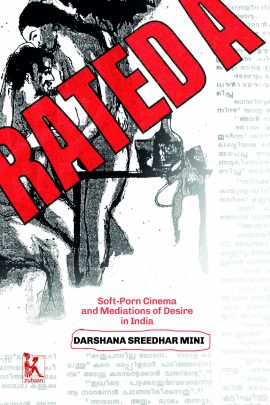
Rated A: Soft-Porn Cinema and Mediations of Desire in India
Price range: ₹ 490 through ₹ 695In the 1990s, India’s mediascape saw the efflorescence of edgy soft-porn films in the Malayalam-speaking state of Kerala. In Rated A, Darshana Sreedhar Mini examines the local and transnational influences that shaped Malayalam soft-porn cinema—such as vernacular pulp fiction, illustrated erotic tales, and American exploitation cinema—and maps the genre’s circulation among blue-collar workers of the Indian diaspora in the Middle East, where pirated versions circulate alongside low-budget Bangladeshi films and Pakistani mujra dance films as South Asian pornography. Through a mix of archival and ethnographic research, Mini also explores the soft-porn industry’s utilization of gendered labor and trust-based arrangements, as well as how actresses and production personnel who are marked by their involvement with a taboo form negotiate their social lives. By locating the tense negotiations between sexuality, import policy, and censorship in contemporary India, this study offers a model for understanding film genres outside of screen space, emphasizing that they constitute not just industrial formations but entire fields of social relations and gendered imaginaries.
______________________________________________________________________________________A model for future film scholars. The decade-long research that went into making this book is evident in its rich historical details, insightful conversations, and multisited fieldwork. Perhaps even more impressive is Darshana Sreedhar Mini's ability to pull together such vast and diverse material in a riveting story, so absorbing and beautifully written that I often felt like I was reading a novel. This exemplary work will produce lively discussions about film historiography, diaspora, stardom, authorship, and sexuality.—Monika Mehta, author of Censorship and Sexuality in Bombay Cinema, 2011In Rated A: Soft-Porn Cinema and Mediations of Desire in India, Darshana Mini takes readers on a truly fascinating exploration of Malayalam soft-porn cinema that emerged in the 1980s and captivated millions of viewers across India and the Middle East. Extensive archival and ethnographic research reveals the local and global influences that shaped the genre, the social and gendered dynamics of the industry, and the complex politics of sexuality and censorship in contemporary India. By challenging the dominant narratives of pornography as a Western phenomenon, this book provides a new model for studying soft-core film genres in diverse cultural contexts.—Clarisa Smith, One for the Girls! The Pleasures and Practices of Reading Women’s Porn(2007), Co-editor Porn Studies JournalRated A is a fascinating cultural history of Malayalam soft porn cinema, and moreover of its afterlives - how it is remediated across a range of sites, reverberating in the cultural imagination. In the unfolding of that history, Darshana Mini shows how soft porn and the debates and desires that it provokes are entangled with the building of gender, sexuality, politics, and social life. A major new contribution to the study of pornographies.—Feona Attwood, author of Sex Media (2017) and Co-editor of Porn Studies Journal______________________________________________________________________________________DARSHANA SREEDHAR MINI is Assistant Professor of Film at the University of Wisconsin–Madison and co-editor of South Asian Pornographies: Vernacular Formations of the Permissible and the Obscene.
Continue Reading Rated A: Soft-Porn Cinema and Mediations of Desire in IndiaIn stock
Desire and Its Discontents: Queer Politics in Contemporary India
Price range: ₹ 630 through ₹ 895Has the queer movement's politics in India escaped the combined onslaught of neoliberalism, Hindutva and brahminism? What has this triad done to queer politics in the wake of the 'reading down' of India's sodomy law? Has the decriminalization of adult, consensual and private sex, depoliticized the queer movement? Is the queer movement immune to casteist, sexist and religious prejudice? In the aftermath of the failures and triumphs in the historic Naz, Koushal, NALSA and Navtej judgements of the Supreme Court of India, the essays in this volume engage in a counterintuitive interrogation of the prejudiced dimensions of the mainstream queer movement in India. The essays offer insights into the ways in which new forms of queer solidarities, mobilizations and imaginaries are resisting and subverting the movement's tacit and overt alignments with neoliberalism, Hindutva and brahminism.
______________________________________________________________________________________
‘Too often, queer activists and scholars seeking emancipation through legal rights forget how much context matters, and how much law is committed to maintaining the very hierarchies that state power relies upon. Readers of this volume are unlikely to ever forget again. Contributors expose the exclusionary representations of queer legal subjects produced by recently celebrated judgements in the context of India, tracking myriad linkages to the right-wing, neoliberal, Hindutva agenda of the present government. Readers will emerge better equipped to continue the struggle for liberation wherever they are located.’
—Dianne Otto, Professorial Fellow, Melbourne Law School, The University of Melbourne
‘This uniquely caring anthology edited by Dipika Jain and Oishik Sircar at long last inaugurates an Indian critical queer theory, which is not a replica of the Euromerican approaches. Even as we welcome the decriminalization of gayness, we are asked to rethink beyond legal emancipation towards social emancipation—where there are very few subjects desiring neoliberalism. The struggles for a quest for queer politics constitute a response against the “violence and exclusions” of the triple enslavement constantly generated by forms, and forces of “Hindutva, neoliberalism and brahminism”. The “conditions of postmodernity” that further affect the “spectacles of emancipation” invite contemplation: how is an “embracing of the disruptive potential” of trans and gender non-binary identities, to create a “sustainable, radical politics, while simultaneously asserting the right to access state benefits?”. This book summons new futures beginning with a trans-constitutional renaissance.’
—Upendra Baxi, Emeritus Professor of Law, Universities of Warwick and Delhi
‘Dipika Jain and Oishik Sircar’s much anticipated second volume of essays extends their path-breaking original insights into the intimate entanglements of queer politics and neoliberalism. This volume too is poised to become nothing short of a classic, in bringing together some of the best-known voices on the politics of gender and sexuality. Turning their critical gaze to India, after the abrogation of Section 377, the essays offer refreshingly counter-intuitive analyses of such queer success and freedoms. In the aftermath of the decriminalization of homosexuality, the underlying nexus between Hindu nationalism, neoliberalism, casteism and queer rights has come fully to the fore. The volume provokes new ways to think of homonationalism and homocapitalism from this vantage point. Yet it is much more. From the relationship of queer to gender, caste, feminism and majoritarianism, to the transnational travel of Indian queerness to queering as a method, these remarkable interventions will singularly and together redirect our analytical and methodological impulses as well as reaffirm our political commitments to feminist queer worldmaking.’
—Srila Roy, Professor, Department of Sociology, University of the Witwatersrand
______________________________________________________________________________________DIPIKA JAIN is Professor of Law, Vice Dean (Research), Vice Dean (Clinical Legal Education), and the Director of the Centre for Justice, Law and Society at Jindal Global Law School (JGLS), India. She served as a visiting faculty member at the Transnational Law Institute at Kings College London from 2017-2020. Her research was cited by the Supreme Court in the landmark decision of Navtej Johar v. Union of India (2018). In 2018, she was designated the first Research Professor at JGLS. In 2020, her research was cited in the legislative debate on abortion laws in the Indian Parliament. She has published in several prestigious journals, law reviews, and compendia internationally, and her work can be found at https://jgls.academia.edu/DipikaJain. She has consulted for the UNDP, Centre for Reproductive Rights (New York), ARROW, and IPAS Development on Reproductive Justice, Digital Health and Family Law. As the Director of CJLS, she has addressed various barriers in access to justice for marginalized persons in India.
OISHIK SIRCAR is Professor of Law at Jindal Global Law School, and an associate member of the Institute for International Law and the Humanities, Melbourne Law School. Oishik is the author of Violent Modernities: Cultural Lives of Law in the New India (Oxford University Press, 2021) and Ways of Remembering: Law, Cinema and Collective Memory in the New India (Cambridge University Press, 2024). With Dipika Jain, Oishik has previously co-edited New Intimacies, Old Desires: Law, Culture and Queer Politics in Neoliberal Times (Zubaan, 2017). With Debolina Dutta, Oishik is the co-director of the award-winning documentary film We Are Foot Soldiers (PSBT, 2010).
Continue Reading Desire and Its Discontents: Queer Politics in Contemporary IndiaIn stock

Sita’s Voice in the Assamese Rāmāyaṇa
Price range: ₹ 560 through ₹ 695Sita’s Voice in the Assamese Rāmāyaṇa is a translation of select verses from the Assamese Saptakāṇḍa Rāmāyaṇa of Mādhava Kandalī, Śaṅkaradeva and Madhavdeva, written between the 14th-15th centuries CE. This vernacular rendition of the Vālmīki Rāmāyaṇa has been translated with a scholarly introduction by Tilottoma Misra. The selected verses represent a distinctive creative rendition of the Vālmīki text from the region of Assam by adding new emotional and philosophic dimensions to it. Especially in the Uttarakāṇḍa ascribed to Śaṅkaradeva, Sita’s voice acquires a unique quality in her final rejection of Rāma thereby expressing her ultimate disillusionment with him, the much-acclaimed paragon of all virtues.
“Others may praise him for all his deeds. But Death incarnate is Rāma for me.”
“I have never heard of a husband more unkind than he. O how can I look upon him again with love and pride?”
—Uttarakāṇḍa of Śaṅkaradeva
______________________________________________________________________________________
TILOTTOMA MISRA writes on literatures from Northeast India, particularly Assam, and on gender and the nationality question. She is author of Swarnalata (1991, English translation 2012, Zubaan), Louhitya Sindhu (1997), Kameikhar Ghar (2013, English translation High Wind, 2020, Zubaan), Literature and Society in Assam: A Study of the Assamese Renaissance 1826-1926 (1987) and editor of the Oxford Anthology of Writings from North-East India (2011). She has translated and edited Gunabhiram Barua’s Ramnabami-Natak (2007). She was awarded the Ishan Puraskar by Bharatiya Bhasha Parishad for Swarnalata, and the Lummer Dai Award by the Arunachal Pradesh Literary Society and the Assam Sahitya Sabha for Kameikhar Ghar. Continue Reading Sita’s Voice in the Assamese RāmāyaṇaIn stock
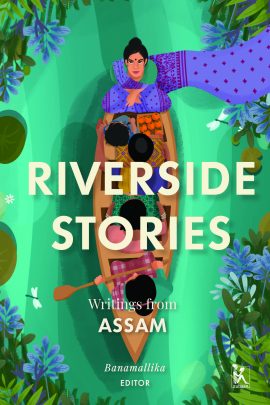
Riverside Stories: Writings from Assam
Price range: ₹ 480 through ₹ 595Stories abound in Assam’s fields, ponds, rivers, forests, hills and cities. Most of its people wear each other’s clothes, eat each other’s food and speak each other’s languages. Diversity and amalgamation are the primarily identifiable elements of people from Assam. Yet, everyday patriarchy and politics of boundaries have resulted in so much confusion and conflict. Thankfully, we are witnessing emerging voices of people who experience life differently because of their own identities and locations and propose an inclusive space for us all. The women and transpeople who have contributed to Riverside Stories come from this diversity and bring their stories of multiple experiences from Assam to the world. This collection of fiction, non-fiction, poetry and visual stories, puts on record the experiences of the self, the very personal, within homes, in the environment, with politics, and with disappointments, desires, hopes and memories for a future. In putting together this anthology, it is our hope that we have complicated—more than it already is—the notion of whose and which stories can be told.
______________________________________________________________________________________BANAMALLIKA is mostly a disheartened feminist activist from Assam. She has used storytelling as a tool for questioning power in her personal life and professional work. To her ever-expanding array of activities, she has added drawing, filmmaking, entrepreneurship, gardening, theatre, cooking, research, writing and, very recently, playing with clay. She draws her sustenance from the feminist movement and its solidarity. She is currently fantasising about not having to write another proposal or project report and living on a farm on a foothill by a spring.
Continue Reading Riverside Stories: Writings from Assam