This book addresses the current issues of violence, masculinity and power in the postcolonial context and their representation in films.The essays contribute critical insights into the analyses of films based on societal violence in postcolonial cultures: be it in the context of colonial oppression, terrorism, genocide, communal riots, criminal underworld or mob violence etc.
The volume seeks to investigate some of those variegated facets of postcolonial ‘violences’ as they are played out in historically and culturally diverse public spaces of different postcolonial societies through the paradigm of cinematic representation. Although the book seeks to explore the phases of differences among postcolonial cultures, the essays hinge around common questions ? How does the experience and representation of violence change with the specificity of the postcolonial context? How do postcolonial cinemas negotiate ideas of conflict through the scenes of violence? How does violence as a cinematic trope shape postcolonial identities, especially of masculinities?
The authors set out to discuss these through the spectacle of violence in postcolonial films, consequently invoking issues of both representational and affective aspects of violence as a performative act in the postcolonial public space.
Continue readingThis landmark collection on colonial history is now available in a brand new edition as part of the Zubaan Classics series to celebrate Zubaan’s 10th anniversary.
This collection of essays stands at an unarticulated conjuncture within the feminist movement and women’s studies that have emerged in India since the 1970s. The anthology attempts to explore the inter-relation of patriarchies with political economy, law, religion and culture and to suggest a different history of ‘reform’ movements, and of class and gender relations. The book seeks to uncover the dialectical relation of feminism and patriarchy both in the policies of the colonial State and the politics of anticolonial movements. The writers in this volume include scholars from various disciplines.
KUMKUM SANGARI & SUDESH VAID taught literature at Indraprastha College for Women, Delhi University. Together they have edited a collection of essays entitled Women and Culture and have carried out extensive research on widow immolation in Rajasthan.
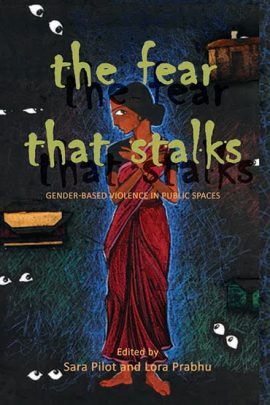
Continue readingThis book is an attempt to understand the causes, nature and consequences of gender-based violence in public spaces. It provides a framework that locates gender based violence within the politics and dynamics of public space, and helps us to understand the commonality between these diverse forms of violence, ranging from sexual harassment, sexual assault, moral policing, ‘honour’ killing, acid throwing, witch hunting, parading naked, tonsuring, rape and homicide. The writers unpack and examine the idea of a ‘public’ space: although by and large a notional space, they begin by identifying it as the geographical space between the home and the workplace and then, go beyond this to look at the violation faced by homeless women and girls who live on the streets, as well as those who work in public spaces in the unorganised sector.
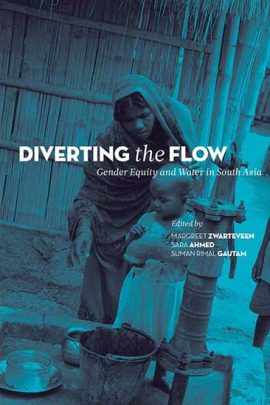
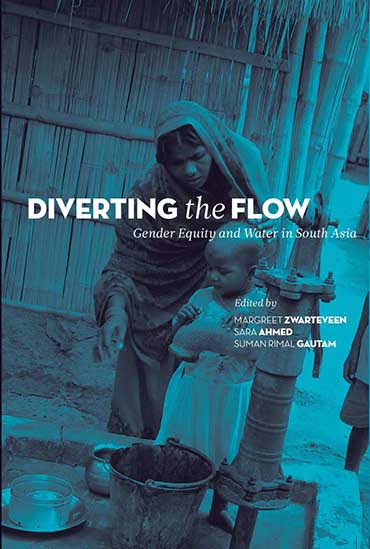
Continue readingAcross the South Asian region, water determines livelihoods and in some cases even survival. However, water also creates exclusions. Access to water, and its social organisation, are intimately tied up with power relations. This book provides an overview of gender, equity and water issues relevant to South Asia. The essays empirically illustrate and theoretically argue how gender intersects with other axes of social difference such as class, caste, ethnicity, age and religion to shape water access, use and management practices. Divided into six thematic sections, each of which starts with an introduction of relevant concepts, debates and theories, the book looks at laws and rights, policies, technologies and intervention strategies. In all, the book clearly shows how understanding and changing the use, distribution and management of water is conditional upon understanding and accommodating gender relations.
Continue readingAn innovative collection of essays on events and dynamics across South Asia, this volume addresses how violence marks the present in wars of direct and indirect conquest. Anti-colonial struggles that achieved independence to form postcolonial nation-states have consolidated themselves through prodigious violence that defines and disfigures communities and futures. This book examines the very borders such brutality enshrines and its intimate inscriptions upon bodies and memories, examining the performance of gendered violence through the spectacular and in everyday life, through wars, nationalisms and displacements. Women in and of South Asia offer inspired, gendered and contested histories of the discontinuous present, excavating nation-making and its intersections with projects of militarisation and cultural assertion, modernisation and globalisation, noting how Gujarat, post-9/11 mobilisations, and the war on Afghanistan and Iraq by Empire, signify the rapidity with which brutal events continue to encompass lives and cultures globally.
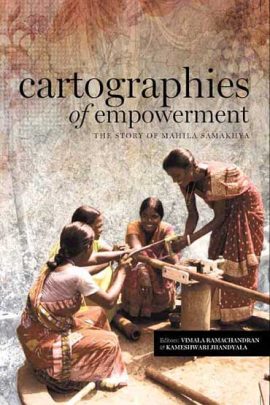
Continue readingMahila Samakhya is as much a story of a government programme for women’s education and empowerment, as it is of the celebration of the struggles of poor women for their rights. Spread across eight states and more than 150 districts in India, the programme grew out of a unique partnership between the women’s movement and the government. In this collection of essays, scholars from different parts of the country chart Mahila Samakhya’s fascinating journey of setting up poor women’s collectives, and women’s agency in establishing an equal space and voice in the public domain – a radical departure from the more common approaches of organising women around economic concerns. The writers explore broad gender issues grounded within the field experience of Mahila Samakhya providing insights into its workings at different levels, its conceptual challenges, strategic choices, the opportunities and pitfalls of partnership with government and, above all, the willingness of poor women to come together voluntarily to address and overcome gender barriers.
Continue readingA long time ago, a young prince, the heir to a great South-Asian kingdom, wielded Siva’s mighty bow and won the heart of a brave princess.
The story of what happened next to the married couple, the Ramayana, told and re-told countless times over the centuries, begins where most stories end. The twenty-five stories in Breaking the Bow take a similar courageous leap into the unknown. Inspired by the Ramayana and its cultural importance, the anthology dares to imagine new worlds.
Here you will find magic realist and surreal stories. Robot and cyberpunk stories. Fantasy and science fiction stories. Hard-to-classify stories.
Stories by some of the best writers in contemporary south-Asian fiction, including Abha Dawesar, Rana Dasgupta, Priya Sarukkai Chabria, Tabish Khair, Kuzhali Manickavel, Mary Anne Mohanraj and Manjula Padmanabhan. Stories not only from India, Sri Lanka and Thailand, but also Dubai, Israel, Holland, the United Kingdom, Canada and the United States.
Breaking the Bow is a collection of brilliant, original and beautifully told tales, guaranteed to enlighten and entertain.
Continue readingPLEASE NOTE: This copy is discounted at 80% and is in saleable but not pristine condition. It may show signs of age or wear.
An essential guide to the best Indian children’s books available in the market.
An invaluable guide to some of the very best Indian children’s books in English. From beloved classics to the latest publications, this book is a must-have one-stop shop for teachers, parents, kids, librarians, bookstores and indeed anyone interested in children’s books. Conveniently divided according to age-groups from 0 to 15, the books have been reviewed by a range of readers, children as well as adults, who simply love that book and want to share their enthusiasm with others. In a list that has been extensively and collaboratively compiled by some of the leading experts, publishers, writers, booksellers and teachers in the country, 101 Indian Children’s Books We Love, is sure to be a classic.
The guide is supplemented by essays by leading Indian language experts on children’s literature in Hindi, Bengali, Marathi and Malayalam, an essay on bilingual books by Radhika Menon of Tulika, extended entries on key figures such as Ruskin Bond, Satyajit Ray and Jim Corbett, and on the importance of early learning by leading UK book consultant Wendy Cooling.
“A gem of a book”– Sanjna Kapoor
_______

A comprehensive guide for people looking for rounded and inclusive feminist books for children, by Zubaan’s very own Anita Roy.
Continue readingMainstream feminist discourse has failed to fully engage with commercial sex work. In a series of groundbreaking, previously unpublished essays, The Business of Sex corrects this lacuna.
Moving beyond the traditional feminist focus on slavery and trafficking, HIV/AIDS, and other health issues, the contributors to this volume engage fully with the political and theoretical implications of sex work. Dismissing old antagonisms, they argue that feminism—thanks to its role in revolutionizing perspectives on sexuality and labor—is a natural ally for the sex workers’ rights movement. In the process, these innovative scholars provocatively critique the dominant moral paradigm of heterosexual monogamy, which has created a pervasive “victim” discourse and limited our understanding of sex work’s complex realities.
Drawing on first-hand stories of sex workers and prostitutes, this volume gives voice to newly articulated movements such as “whore feminism” and “queer feminism”—feminisms that have the potential to move discussions about sex work onto new and fruitful terrain.
LAXMI MURTHY is a consulting editor at Himal Southasian and heads the Hri Institute for Southasian Research and Exchange.
MEENA SARASWATHI SESHU is the general secretary of SANGRAM, an organization that works to protect the rights of sex workers and people living with HIV/AIDS in Sangli, Maharashtra.
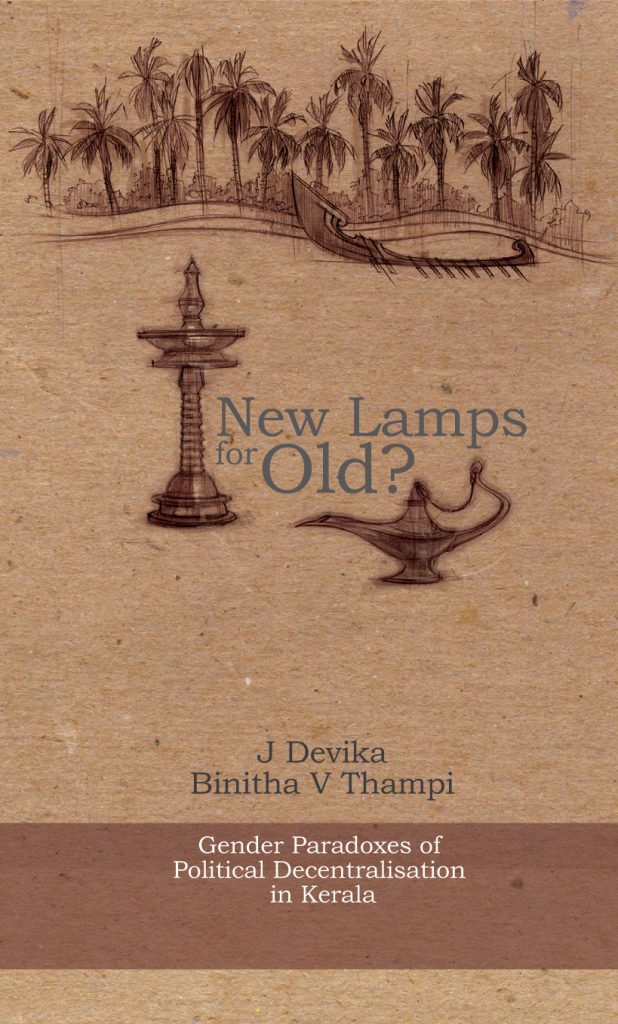
Continue readingBased on a large number of interviews with women politicians of many generations and women who have entered the three-tier Panchayati Raj institutions since the mid-1990s in Kerala, this book tries to initiate fresh debate on the impact of the large-scale induction of women into the institutions of local self-government in India. The State of Kerala has been hailed as a success story in accommodating gender concerns in local-level planning and political decentralisation; this conclusion has been based on relatively simple evaluative exercises that ask whether women of diverse backgrounds have gained entry into formal institutions of governance or not.
This book seeks to place political decentralisation and its possibilities for women within the historical and contemporary contexts. Against the popular assumption that the liberal feminist promise made by the state will be delivered, say, once the noxious influence of male relatives is removed, the book points to the multiple social forces that shape possibilities and hindrances for women, and reshape gender divisions in the political field. The book thus pays attention to women in both local governance and politics. Secondly, it examines how women have utilised, extended, survived within or subverted these spaces. In the present context in which fifty per cent of the seats in the institutions of local self-government are being reserved for women, and there exists considerable skepticism about reservations for women in the Parliament, this book offers reflections on both local governance and ‘high’ politics.
Continue readingThe essays in the volume consider the significance of nation and gender in the context of post-1989 transitions in the former Soviet Union and Yugoslavia and in the context of post-partition India. The texts critique the ways in which narratives of nationhood and womanhood naturalize and essentialize difference and hierarchy. The authors explore uses of sexualized/gendered imagery in defining the space of the nation and sexualized/gendered metaphors of state fatherhood and motherhood in defining the distribution of power within that space. of the nation (e.g. feminized landscapes and battlefields) and sexualized /gendered metaphors of state fatherhood and motherhood in defining the distribution of power within that space. The particular histories of nationalism and partition are different in the countries involved, but commonalities in the narrative structures, state ad nation-building strategies, patriarchal patterns of control, and mechanisms of inclusion and exclusion are striking. This is particularly so with respect to the ways in which exclusive national identities are constituted through gendered representations of the nation and its members.
Continue readingContact Us
© Zubaan 2019. Site Design by Avinash Kuduvalli.
Payments on this site are handled by CCAvenue.