This collection of essays focuses on the post-1980s period of the Indian feminist movement, a moment rich in new and different modes of resistance, of widespread political engagements with issues of rights, of justice, of identity and much more. The writers here, all well-known activists and founders of some of the most important of feminist institutions, describe their individual and collective journeys, bringing attention to the movement, to their struggles, their campaigns, their victories and the challenges they have faced. In using the tools of feminist analysis – a focus on life stories, on oral accounts, on group formation and more – they also make a case for advocacy through legal and socio-political means.
Despite being one of the most dynamic of feminist movements in the world, the Indian feminist movement has seldom been recognized as such. And yet, in addressing how women’s oppression and discrimination lie at the intersection of complex inequalities of caste, of region and religion, of class, of patriarchy, race, ethnicity, to name only a few, the writers in this volume make a case for the need for constant introspection, reflection and self-questioning, so that the movement can learn and grow. They show how in India, and indeed across much of South Asia, it is feminists who have stood against capitalism, war and violence, environmental degradation and fundamentalism and have forged alliances with varied movements, learning from them, working strengthening them but also infusing them with a feminist analysis.
CONTRIBUTORS: Flavia Agnes | Abha Bhaiya | Anjali Dave | Padma Deosthali | V. Geetha | Poonam Kathuria | Corinne Kumar | Kanchan Mathur | Madhu Mehra | Yashoda Pradhan | Sangeeta Rege | Jaya Sharma | Taranga Sriraman | Suneeta Thakur | Saumya Uma
Poonam Kathuria is the founder and executive secretary of SWATI (Society for Women’s Action and Training Initiative).
Abha Bhaiya is one of the founder members of Jagori, a feminist organization set up in 1984 in Delhi.
Both are activists with a longstanding involvement in the women’s movement in India.
Continue readingOver the last several years, regular evaluation of development programs has become essential in measuring and understanding their true impact. Feminist and gender-sensitive evaluations have gradually emerged, drawing attention to existing inequities—gender, caste, class, location, and more—and the cumulative effect of these biases on daily life. Such evaluations are also deeply political; they explicitly acknowledge that gender-based inequalities exist, show how they remain embedded in society, and articulate ways to address them.
Based on four years of research, Voices and Values offers critical insight into how gender, class, and nationality inflect and affect sociological research. It examines how feminist evaluations could make an effective contribution to new policy formulations oriented to gender and social equity. The essays here focus centrally on the structural roots of inequity: giving weight to all perspectives; adding value to marginalized groups and people under evaluation; and taking forward the findings of evaluation into advocacy for change. In doing so, each essay advances the understanding of feminist evaluation both conceptually and as practice.
CONTRIBUTORS: Venu Arora | Sneha Bhat | Pallavi Gupta | Vasundhara Kaul | Renu Khanna | Seema Kulkarni | Ranjani K. Murthy | Rajib Nandi | Srinidhi Raghavan | Neha Sanwal | Shubh Sharma | Ratna M. Sudarshan | Enakshi Ganguly Thukral | Sonal Zaveri
Continue readingMany consider the autobiography to be a Western genre that represents the self as fully autonomous. The contributors to Speaking of the Self challenge this presumption by examining a wide range of women’s autobiographical writing from South Asia.
Expanding the definition of what kinds of writing can be considered autobiographical, the contributors analyze everything from poetry, songs, mystical experiences and diaries, to prose, fiction, architecture and religious treatises. The authors they study are just as diverse: a Mughal princess, an eighteenth-century courtesan from Hyderabad, a nineteenth-century Muslim prostitute in Punjab, a housewife in colonial Bengal, a Muslim Gandhian devotee of Krishna, several female Indian and Pakistani novelists and two male actors who worked as female impersonators.
The contributors find that in these autobiographies the authors construct their gendered selves in relational terms. Throughout, they show how autobiographical writing – in whatever form it takes – provides the means towards more fully understanding the historical, social and cultural milieu in which the author performs herself and creates her subjectivity.
Continue readingIn the last 15 years, queer movements in many parts of the world have helped secure the rights of queer people. These moments have been accompanied by the brutal rise of crony capitalism, the violent consequences of the ‘war on terror’, the hyper-juridification of politics, the financialization/managerialization of social movements and the medicalization of non-heteronormative identities/practices. How do we critically read the celebratory global proliferation of queer rights in these neoliberal times?
This volume responds to the complicated moment in the history of queer struggles by analysing laws, state policies and cultures of activism, to show how new intimacies between queer sexuality and neoliberalism that celebrate modernity and the birth of the liberated sexual citizen, are in fact, reproducing the old colonial desire of civilizing the native. By paying particular attention to the problematics of race, religion and class, this volume engages in a rigorous, self-reflexive critique of global queer politics and its engagements, confrontations, and negotiations with modernity and its investments in liberalism, legalism and militarism, with the objective of queering the ethics of our queer politics.
Continue reading
The Sexual Violence and Impunity in South Asia research project (coordinated by Zubaan and supported by the International Development Research Centre) brings together, for the first time in the region, a vast body of knowledge on this important – yet silenced – subject. Six country volumes (one each on Bangladesh, Nepal, Pakistan, Sri Lanka, and two on India) comprising over fifty research papers and two book-length studies detail the histories of sexual violence and look at the systemic, institutional, societal, individual and community structures that work together to perpetuate impunity for perpetrators.
In this collection of essays on Sri Lanka the authors – activists, lawyers, academics, journalists – look back at Sri Lanka’s long and intense armed conflict during which women and men were sexually brutalized, assaulted, tortured and disappeared. They examine not only the rampant sexual violence during the conflict period, and the impunity enjoyed by its perpetrators, but focus also on women’s struggles for survival, their interactions with community leaders and their navigation of society’s expectations, their understanding of, and access to justice. Essay after essay argues compellingly for the need to stop treating survivors of sexual violence as victims and to start seeing them as potentially powerful agents of change.
The writers highlight a hitherto unaddressed aspect of sexual violence: that of the structures that enable impunity on the part of perpetrators, be they security personnel and paramilitary forces, members of armed rebel groups, gangs, local politicians and police or ordinary citizens including close family members.
They demonstrate how impunity for perpetrators is both a failure of the formal justice process and a product of individual, community and social conditions and indeed the choices that victims and families often make, which promote silence over truth. At the end of more than a quarter century of conflict that has left some 100,000 dead, 50,000 women-headed households struggling to survive, and created countless victims and survivors of sexual violence, the calls for justice can no longer be ignored.
Continue readingThe Sexual Violence and Impunity in South Asia research project (coordinated by Zubaan and supported by the International Development Research Centre) brings together, for the first time in the region, a vast body of knowledge on this important – yet silenced – subject. Six country volumes (one each on Bangladesh, Nepal, Pakistan, Sri Lanka, and two on India) comprising over fifty research papers and two book-length studies detail the histories of sexual violence and look at the systemic, institutional, societal, individual and community structures that work together to perpetuate impunity for perpetrators.
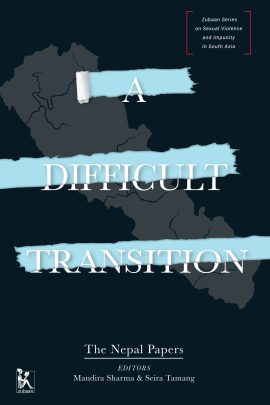
The essays in this volume focus on Nepal, which though not directly colonized, has not remained immune from the influence of colonialism in its neighbourhood. In addition to home-grown feudal patriarchal structures, the writers in this volume clearly demonstrate that it is the larger colonial and post-colonial context of the subcontinent that has enabled the structuring of inequalities and power relations in ways that today allow for widespread sexual violence and impunity in the country – through legal systems, medical regimes and social institutions.
The period after the 1990 democratic movement, the subsequent political transformation in the aftermath of the Maoist insurgency and the writing of the new constitution, has seen an increase in public discussion about sexual violence. The State has brought in a slew of legislation and action plans to address this problem. And yet, impunity for perpetrators remains intact and justice elusive. What are the structures that enable such impunity? What can be done to radically transform these? How must States understand the search for justice for victims and survivors of sexual violence? The essays in this volume attempt to trace a history of sexual violence in Nepal, look at the responses of women’s groups and society at large, and suggest how this serious and wide-ranging problem may be addressed.
Continue readingThe Sexual Violence and Impunity in South Asia research project (coordinated by Zubaan and supported by the International Development Research Centre) brings together, for the first time in the region, a vast body of knowledge on this important – yet silenced – subject. Six country volumes (one each on Bangladesh, Nepal, Pakistan, Sri Lanka, and two on India) comprising over fifty research papers and two book-length studies detail the histories of sexual violence and look at the systemic, institutional, societal, individual and community structures that work together to perpetuate impunity for perpetrators.
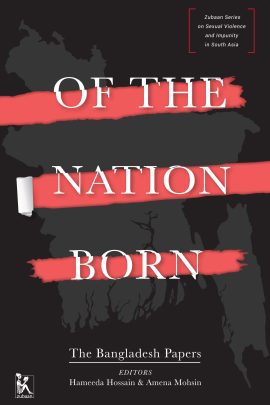
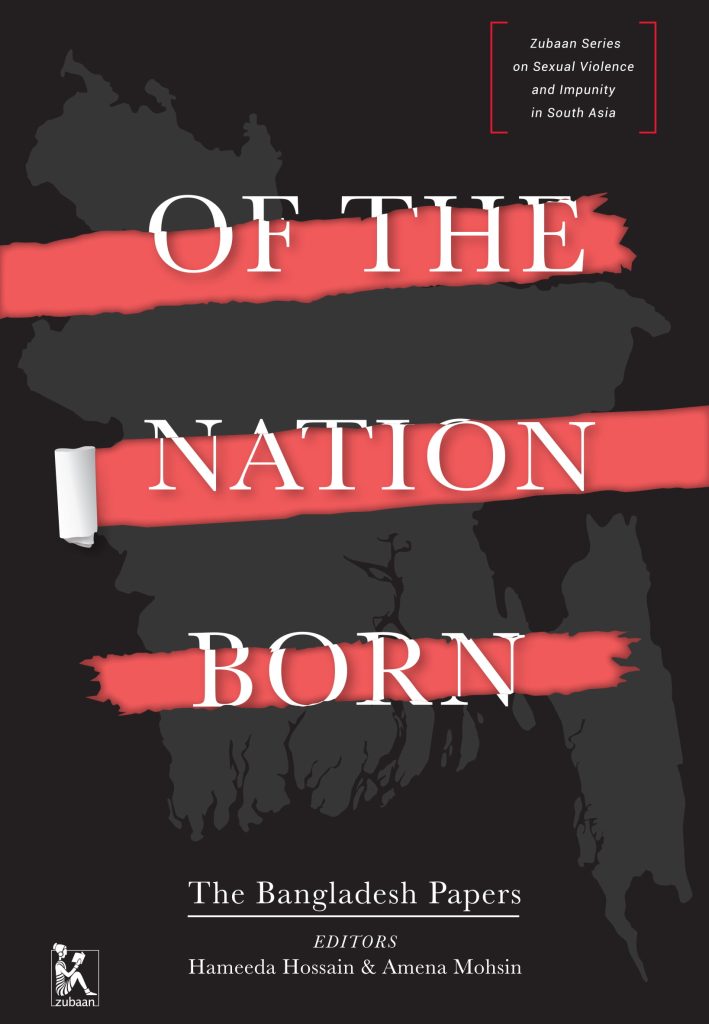
This volume focuses on Bangladesh, a nation born in 1971, in a birth that was as marked by bloodshed as it was by sexual violence. The history of widespread sexual violence, and incidents of sexual slavery, as well as the absence of accountability for the perpetrators, is by now well known. The essays here address the structural dynamics of impunity at the individual and societal levels, looking not only at the conditions that go into its creation, but also the elements that fuel it. They ask what helps it to become so embedded and point to its human, global and national costs. Together they explore the ways in which the women’s movement and feminist practice have worked to demand accountability and recognition for the victims and survivors of sexual violence, challenging the impunities embedded in the patriarchal structures of Bangladeshi society. In doing so, they bear witness to the continuing efforts of women’s groups in Bangladesh to give this crucial issue the attention that it deserves, for without that, justice for victims and survivors, will remain elusive.
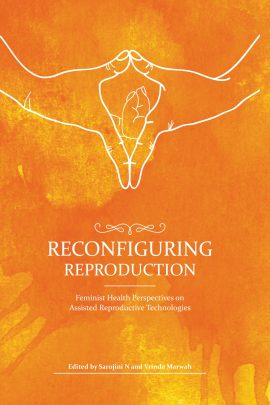
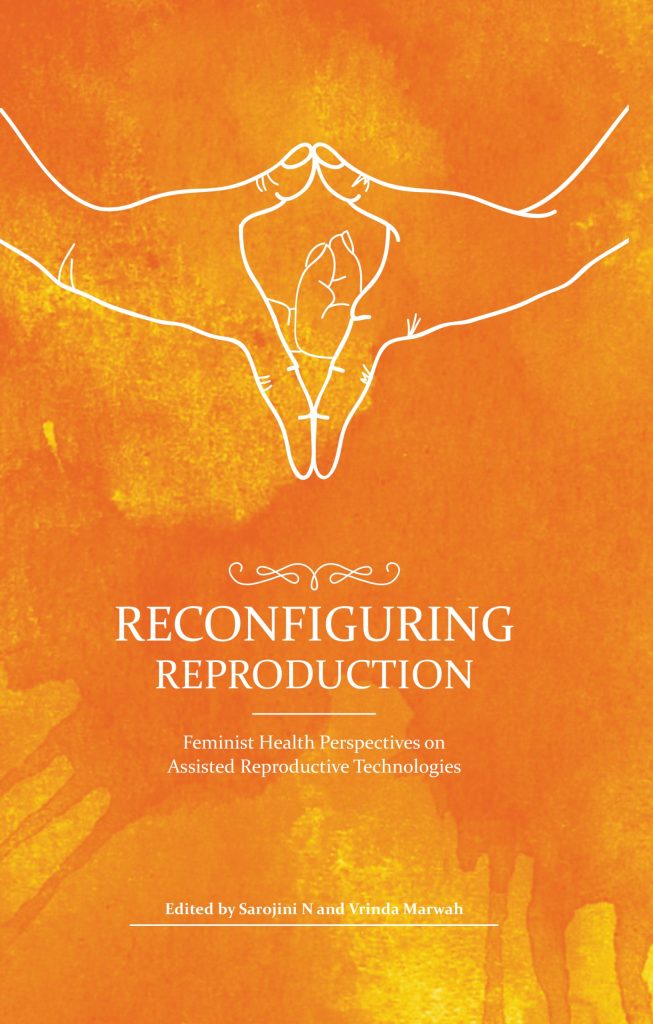
Continue readingThough commonplace today as a technological quick fix for infertility, assisted reproduction is a complex phenomenon, located at the intersection of patriarchy, medicalization and commerce, These technologies create both challenges and opportunities, and responses to them have sought to balance questions of ethics, rights and politics. The essays in this volume map the journey of ARTs in different countries, examining the global industry and the challenges it poses in the context of markets, and look at regulatory frameworks in diverse settings.Together they bring a feminist lens to the examination of the now-established ART industry.
Sama’s long-standing work provides a special focus on India: the spread and features of the industry, the gendered nature of the burden and treatment of infertility, the destabilisation of the family as we know it, and feminist debated around surrogacy that reassess ideas of agency and commodification.
Continue readingDecember 2012: Tens of thousands of people – women, men, families, young, old, rich, poor – come out onto the streets of towns and cities in India to protest the brutal gang rape and murder of a young medical student in Delhi. For days and months, the protests refuse to die down. People demand change, action, commitment to the ideals of democracy and egalitarianism. And they refuse to be silenced.
Soon, a new law is put in place. More and more people start to report incidents of sexual assault. New conversations, new debates begin: is violence increasing? Are we seeing more of it? Was it previously invisible?
In this bold and brilliant collection of visual stories, fourteen young women respond to the activism and debates on the ground; they negotiate anger, fear, hope, resistance. Created in a week-long workshop, these stories talk to each other as they powerfully describe the fierce determination of the writers/artists to continue the battle for change.
Continue readingBe transported into dystopian cities and alternate universes.
Hang out with unicorns, cyborgs and pixies.
Learn how to waltz in outer space.
Be amazed and beguiled by a fairy tale with an unexpected twist,
a futuristic take on a TV cooking show,
and a playscript with tentacles.
In other words, get ready for a wild ride!
This collection of sci-fi and fantasy writing, including six graphic stories, showcases twenty of the most exciting writers and artists from India and Australia, in an all-female, all-star line-up!
Contributors include:
Samhita Arni, Kuzhali Manickavel, Manjula Padmanabhan, Vandana Singh, Payal Dhar, Anita Roy, Annie Zaidi, Penni Russon, Kate Constable, Isobelle Carmody, Justine Larbalestier, Alyssa Brugman, Kirsty Murray, Margo Lanagan, Priya Kuriyan, Prabha Mallya, Amruta Pail, Lily Mae Martin, Nicki Greenberg and Mandy Ord.
_______

A collection of speculative fiction for young adults. It is an excellent way to introduce young readers to a number of feminist world issues and its attendant intersections.
Continue reading
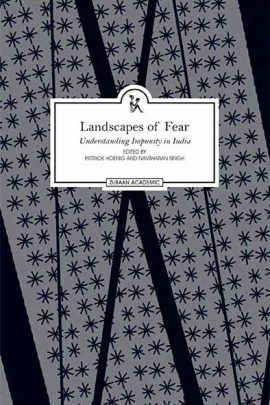
Why does the world’s largest democracy turn a blind eye to systematic violations of human rights in its periphery?
Drawing on the findings of a comparative research project, this volume tackles a set of intricate questions about the workings of impunity in India. How do victims of abuse and survivors of sexual violence end up being denied justice? What do those on the margins—those with the wrong sex, wrong identity markers, wrong political leanings— tell us about violence by state and non-state actors?
Bringing together senior academics, civil society leaders and fresh voices from across India, the volume offers analysis—contextual, structural and gendered—and breaks new conceptual ground on the underbelly of India Shining. The volume contains testimonies that were collected during fieldwork in four states.
CONTRIBUTORS: Sanjay Barbora | Shahana Basavapatna | Anjuman Ara Begum | Uma Chakravarti | Warisha Farasat | Satish K. Jain | Ram Narayan Kumar | Harsh Mander | Bhagat Oinam
Continue readingInspiring, informative, insightful? meet some of India’s most celebrated female scientists. What led them to choose their particular field? Who encouraged them? What were their struggles? What are their sources of inspiration? What are the key questions at the cutting edge of modern research? Why choose a life in science at all? From astrophysics to zoology, learn what it takes to make a career in science.
Continue readingContact Us
© Zubaan 2019. Site Design by Avinash Kuduvalli.
Payments on this site are handled by CCAvenue.